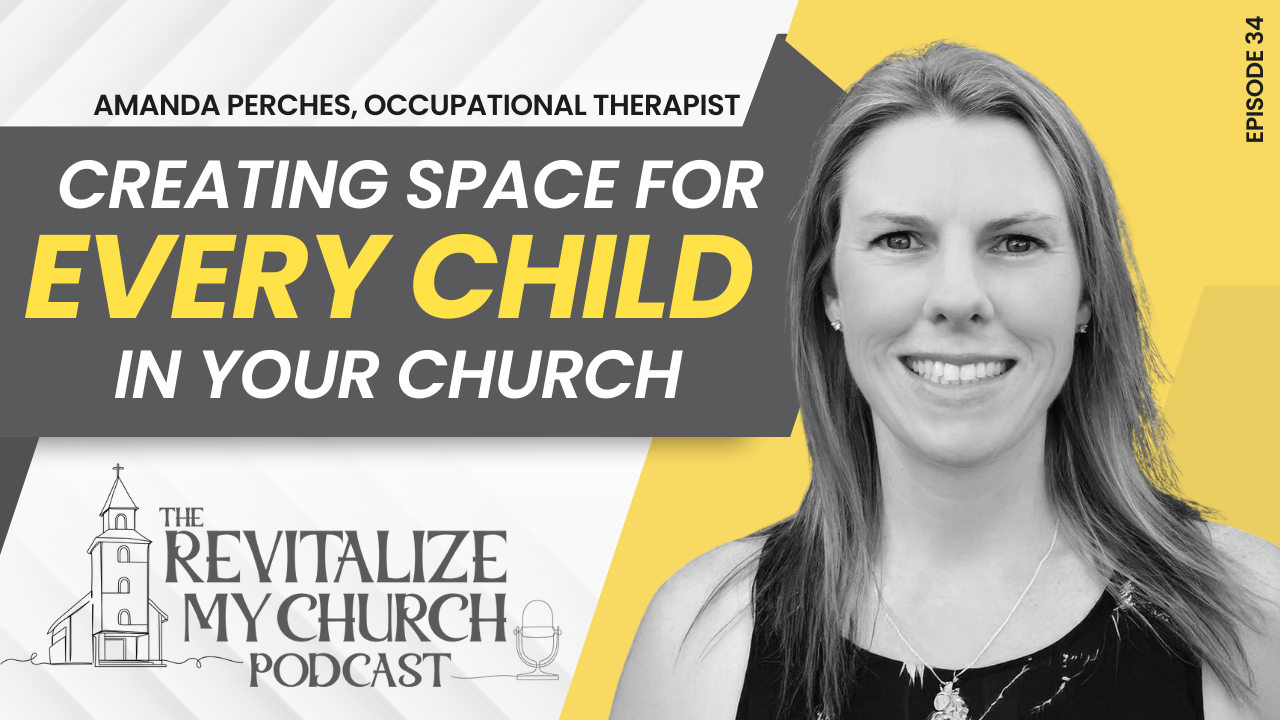
Ep. 034 | Creating Space for Every Child in Your Church
Connecting With Special Needs Families in Your Community
Listen on Spotify | Listen on Apple Podcasts
Creating Spaces in Your Church for Children With Special Needs
December 15, 2025
Understanding Occupational Therapy's Role in Special Needs Ministry
Amanda Perches brings 25 years of experience as an occupational therapist, specializing in helping children with autism, ADHD, cerebral palsy, and Down syndrome. Her work extends beyond traditional therapy to help families navigate the complex journey of special needs parenting. Operating from Fulshire, Texas, Amanda runs two businesses: direct therapy services and Sensational Spaces, which designs environments for neurodiversity.
Why Small Churches Are Perfectly Positioned for Special Needs Ministry
The statistics are compelling: one in five families has a child with special needs, with Houston area data showing one in seven children having autism. Despite this significant population, very few churches offer adequate special needs accommodations. Small churches actually have advantages over megachurches in this area - their quieter, less stimulating environments are naturally more conducive to children with sensory processing challenges.
How to Start a Special Needs Ministry Without Breaking Your Budget
Amanda emphasizes that creating effective special needs spaces doesn't require expensive renovations or Disney World-level productions. Many churches already have suitable spaces that can be adapted with minimal cost and effort. The key is understanding that designing for neurodiversity often involves removing overstimulation rather than adding expensive equipment.
Essential Elements for Creating Sensory-Friendly Church Environments
When designing spaces for children with autism and ADHD, focus on these fundamental principles:
Lighting modifications: Reduce fluorescent lighting and eliminate strobe effects
Sound dampening: Lower volume levels and minimize excess auditory input
Visual simplification: Remove unnecessary wall decorations and reduce pattern overload
Flexible seating options: Include wobble cushions, bean bags, and varied seating arrangements
Quiet retreat spaces: Create secluded areas using tents or partitioned sections
Building Your Church's First Sensory Room on a Minimal Budget
A basic sensory room should accommodate different sensory needs:
Movement and Proprioceptive Input:
Small inflatable trampolines that can be deflated for storage
Simple swings hung from ceiling eye bolts
Hammocks strung between walls
Calming and Compression Tools:
Weighted blankets and lap pads
Bean bags with optional vibration features
Compression items like weighted vests
Age-Appropriate Equipment:
Adult-sized recliners or massage chairs for teenagers and adults
Age-appropriate fidgets and sensory tools
Card games and board games for older participants
What Not to Say When Advertising Your Special Needs Ministry
Avoid making promises about being "sensory-friendly" without proper consultation. Instead, focus on genuine outreach to families in your community. Amanda recommends hosting informational meetings (preferably virtual for easier parent attendance) where you simply ask: "What do your children need? How can we serve your family?" This approach demonstrates humility and genuine desire to help rather than claiming expertise you may not have.
Engaging Teenagers Through Special Needs Ministry Service Opportunities
One unexpected benefit of special needs ministry is its positive impact on teenage volunteers. High school students needing service hours often experience transformative perspective shifts when working with special needs children. This creates a win-win situation: special needs families receive additional support, and teenagers develop empathy, purpose, and healthier perspectives on their own challenges.
Addressing the Whole Family: Supporting Siblings and Parents
Effective special needs ministry extends beyond the child with special needs:
Parent Support:
Provide respite care during services
Create adult discussion groups and support networks
Offer practical guidance on navigating medical appointments and specialists
Sibling Accommodation:
Recognize that siblings often sacrifice activities and attention
Provide age-appropriate spaces and activities for neurotypical siblings
Ensure siblings feel valued and included in church community
Getting Professional Guidance for Your Special Needs Ministry Launch
Before investing in equipment or making major space modifications, consult with occupational therapists who understand sensory processing and environmental design. Amanda's business, Sensational Spaces, combines occupational therapy expertise with interior design to create comprehensive plans. Many modifications can be implemented immediately at little to no cost, while more expensive additions can be planned strategically based on your specific congregation's needs.
The Theological Foundation: Following Jesus's Example in Special Needs Ministry
As Amanda powerfully concludes, Jesus consistently served those with special needs, mental health challenges, and disabilities. The church's calling is simple: show up, ask what people need, and serve them where they are. This isn't about creating perfect programs but about demonstrating Christ's love through practical accommodation and genuine care.
Contact Information and Resources
Amanda Perches, Occupational Therapist
Sensational Spaces (Environmental Design for Neurodiversity)
Location: Texas (30 miles west of Houston)
Action Steps for Church Leaders
Assessment: Evaluate your current space for sensory-friendly potential
Community Outreach: Connect with local elementary schools and special needs families
Professional Consultation: Contact occupational therapists in your area
Start Small: Begin with simple modifications like lighting and seating adjustments
Listen and Learn: Host community meetings to understand specific family needs
Recruit Volunteers: Engage teenagers and adults interested in service opportunities
This special needs ministry approach represents a significant opportunity for smaller churches to differentiate themselves while genuinely serving families who often feel isolated from church community. The investment is minimal, but the impact on families and the broader church community can be transformational.
This episode of the Revitalize My Church podcast provides actionable strategies for church leaders struggling with volunteer recruitment and retention, plus valuable information about federal security grants available to churches and nonprofits.