Thoughtful, intentional, and relational: what keeps young adults coming back
Listen on Spotify | Listen on Apple Podcasts
Why authenticity and mentoring matter more than a big show
November 1, 2026
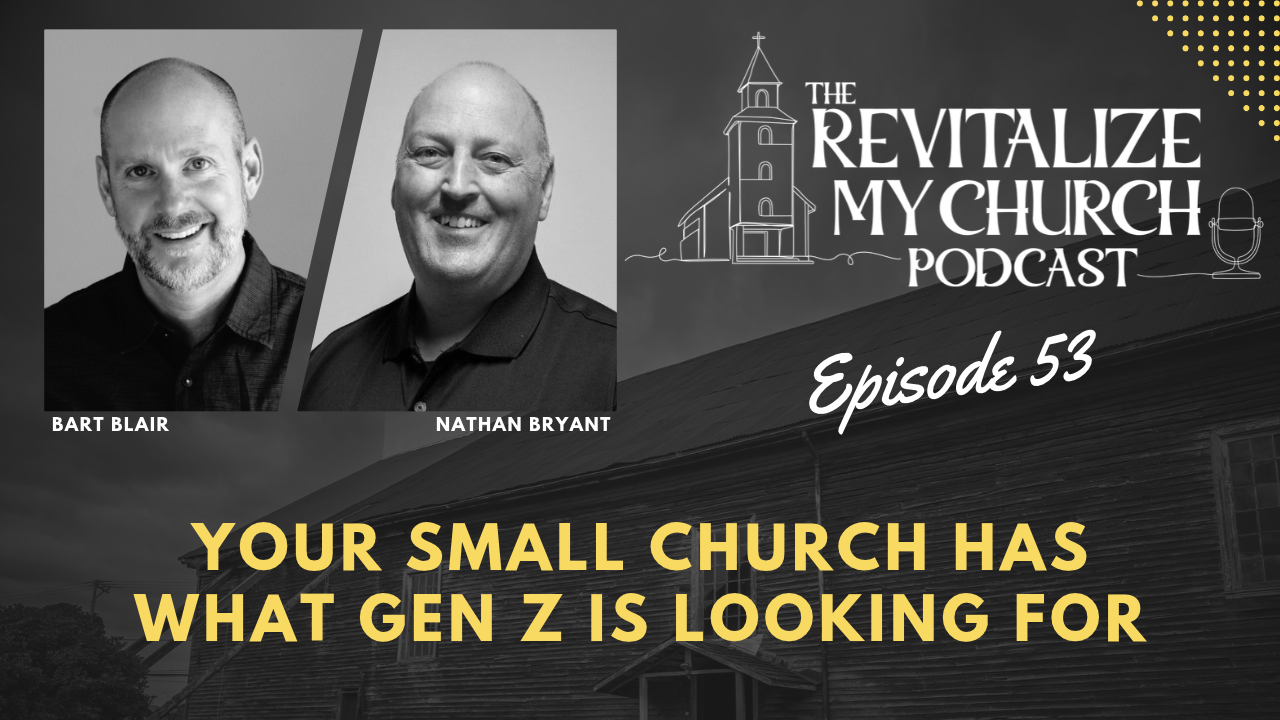
Episode 53: Show Notes
Key Takeaways
Gen Z, and young men in particular, are showing renewed spiritual interest, and small churches are well positioned to respond.
Young adults aren’t looking for a big show. They want to be known, mentored, and given room to ask real questions.
A smaller church can win with a Sunday experience that is thoughtful, intentional, and relational.
Don’t wait for young adults to walk in. Get outside your walls, start with the grandkids and kids of your own members, and follow through on what you offer.
Is Gen Z really coming back to church?
The research says yes, though it’s still early. Bart opens the episode with several trends worth paying attention to:
Gen Z attending religious services at least monthly rose from 29% in 2022 to 40% in 2024. Becket Fund, via The Blaze
Gen Z is still the least religious generation on record: 34% unaffiliated, compared to 29% of Millennials and 25% of Gen X. The Blaze
Men are now outpacing women in weekly church attendance, 46% to 40%. StreamingChurch.tv
Over 70% of Gen Z check out a church online before ever visiting in person. StreamingChurch.tv
Bible sales are up 41.6% since 2022. Carey Nieuwhof
Nathan believes the numbers. He sees the Spirit of God drawing young people, especially young men, in a way we haven’t seen in years. The real question is how churches will respond to the opportunity.
Why aren’t young adults showing up at my small church?
For many revitalization churches, the average age is 55 and up and there isn’t a young adult in the room. Nathan says the issue usually isn’t a lack of interest from young people. It’s that the “road signs” to your church aren’t connecting with them. Those road signs include the sign out front, your website, your Google Business Profile, your social media, and the relationships your people have in the community.
Bart adds that churches need to understand how young adults search. Many are skipping Google and going straight to AI tools like ChatGPT. Digital discovery almost always comes before a personal connection.
How do you make your church appealing to Gen Z without changing who you are?
Bart shares the story of a church that went through a rebrand but filtered every choice through its own tastes rather than the community it was trying to reach. The result still felt too old for a younger audience. The lesson: evaluate your look and messaging through the eyes of the people you want to reach, not the people already there.
Nathan is clear that this isn’t about being flashy. Young adults want a church that looks current and competent, but what really draws them is a place where they can get their questions answered, feel safe, and connect with people who will invest in them.
What are young men looking for in a church today?
Nathan sees a level of intellectual curiosity among young men that he hasn’t seen before. They want to learn, grow, and understand their faith. They also want older, mature believers to invest in them. Many grew up without a dad in the home or spent more time in front of screens than with real people, and they are hungry for something real.
Bart’s son had this experience firsthand. He visited a large church and left feeling like no one noticed he was there. A smaller church may not have the band or the crowd, but it can offer the one thing he was looking for: people who know his name.
Can a small church compete with big churches for young adults?
Yes, because it isn’t the same competition. Young adults who want a big production will find it. Many others aren’t interested in that at all. Nathan notes that a lot of young adults are moving away from big, performance-style worship toward something more participatory, reflective, and authentic. For a smaller church, that authenticity is gold.
What keeps a 22-year-old coming back to church?
Bart boils it down to three things a small church can do well on Sunday:
Thoughtful. The experience engages their mind and emotions and challenges them.
Intentional. It’s clear there is a plan and you aren’t winging it.
Relational. There are clear next steps for building real relationships.
Bart also describes the tension he’s seeing at Bear Creek Community Church, where some young men show up faithfully to a midweek missional community (a meal, Scripture, prayer, and serving together) but have little interest in Sunday mornings.
How do you mentor young adults who visit your church?
Nathan’s practical advice: designate someone in your church who wants to invest in young men and is ready when one walks in. That person introduces themselves, learns their name, and has a plan for what comes next. Don’t overwhelm them, but let them know you want them there and have a path for them to grow. Once a mentoring relationship begins, there is a good chance they will stay.
How can an older church start reaching young adults?
Bart and Nathan close with practical next steps:
Don’t wait for them to walk in. Find natural places outside your building to engage young adults. Bart highlights a church that set up a booth on a local college’s back-to-school day and connected with a young man who now attends and has brought friends.
Ask the young adults you already have. Sit down with them and ask what makes them feel welcome and what you need to change.
Start with your own families. Most older congregations have kids and grandkids in this age group. Take them to lunch, play golf, or spend time with them outside the church.
Follow through. Young adults are sensitive to broken promises. If you offer something, do it.
As a friend of the hosts likes to say, if your church is all 50, 60, and 70-somethings, the future of your church isn’t in the building yet. You’ll have to go get it.
Mentioned in This Episode
Episode 37: Five Common Reasons Church Revitalization Efforts Fail
Episode 49: Does Your Church Website Help or Hurt Your Revitalization?
About the Revitalize My Church Podcast
The Revitalize My Church Podcast helps pastors and leaders of smaller, struggling churches navigate change and move toward a healthy, fruitful future. New episodes release on the 1st and 15th of every month. Subscribe wherever you listen to podcasts, and if you’re watching on YouTube, subscribe and ring the bell so you never miss an episode.